






-
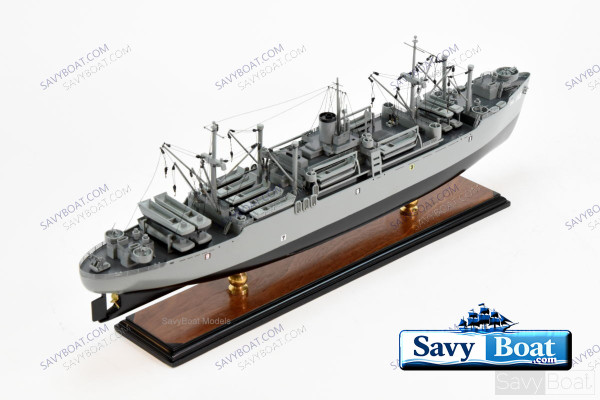
USS HASKELL (APA-117) WWII ATTACK CARGO SHIP
SAVY DIRECT PRICE $649.96MSRP: $699.99USS HASKELL (APA-117) WWII ATTACK CARGO SHIP FULLY BUILT AND READY TO DISPLAY MUSEUM QUALITY SHIP MODEL Dimension approx.: 28″ (long) x 4″ (wide) x 10″ (high). The model is already built. THIS IS... -
 img:new-low-5-bottom-with-special-offer-08042026.pngimg:new-low-5-bottom-with-special-offer-08042026.png
USS IOWA BATTLESHIP (BB-61)
SAVY DIRECT PRICE $100.00 - $899.96USS IOWA BATTLESHIP (BB-61) FULLY BUILT AND READY TO DISPLAY, QUALITY SHIP MODEL Dimension approx.: 40″ L x 5″ W x 12.5″ H Approx. scale 1/350 This beautiful model is already built, NOT a kit. -

USS CONSTELLATION TALL SHIP
SAVY DIRECT PRICE $999.96MSRP: $1,099.99USS CONSTELLATION TALL SHIP FULLY BUILT AND READY TO DISPLAY MUSEUM QUALITY SHIP MODEL Dimension approx.: 36″ L x 11″ W x 26″ H The model is already built. THIS IS NOT A MODEL SHIP KIT
Description

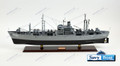
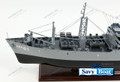
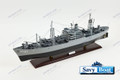
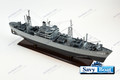
USS MULIPHEN (AKA‑61/LKA‑61) ATTACK CARGO SHIP
FULLY BUILT AND READY TO DISPLAY MUSEUM QUALITY SHIP MODEL
- Dimension approx.: 34″ (long) x 5″ (wide) x 13″ (high).
- The model is already built. THIS IS NOT A MODEL SHIP KIT
The USS Muliphen (AKA‑61/LKA‑61) entered service in the final year of World War II, built for one of the most demanding roles in naval warfare: delivering men, vehicles, and supplies directly into the teeth of amphibious combat. Named after the star Muliphen in Canis Major, she was laid down in May 1944, launched that August, and commissioned on 23 October 1944—a rapid wartime construction that reflected the urgent need for attack cargo ships in the Pacific.
After shakedown in Chesapeake Bay, Muliphen sailed south to Key West to support sonar training before heading to the Pacific in December. She joined Transport Division 43 at Pearl Harbor and prepared for the assault on Iwo Jima, arriving at Eniwetok in early February 1945. When the invasion began on 19 February, she took her place offshore, unloading troops, vehicles, ammunition, and fuel under constant threat from Japanese shore batteries and air attacks. Over the course of the operation, she delivered 1,413 tons of essential cargo—material that sustained Marines fighting across the island’s volcanic terrain.
Her next major operation came at Okinawa, where she participated in feint landings on 1–2 April 1945 to confuse Japanese defenders and support the main assault. The work was grueling and dangerous. Kamikazes prowled the skies, and the ship’s landing craft shuttled back and forth through hostile waters. Muliphen delivered 3,800 tons of combat cargo and lost 11 landing craft in the process—a testament to the intensity of the fighting and the ship’s relentless tempo. After Okinawa, she shifted to cargo duty between the Marianas and Solomons, then carried underwater demolition gear to Manila before transporting occupation troops to Japan. For her wartime service, she earned two battle stars.
With the war over, Muliphen transitioned into a new role. She joined the Naval Transportation Service, carrying cargo and passengers across the Pacific and even supplying remote Point Barrow, Alaska in 1946–47. In 1950, she moved to the Atlantic Fleet Amphibious Force, beginning two decades of Cold War service. From Norfolk she deployed regularly to the Caribbean and Mediterranean, participating in NATO exercises, midshipman training cruises, and amphibious readiness operations.
Her most notable postwar mission came during the Lebanon crisis of 1958, when the 6th Fleet landed Marines to stabilize Beirut. Muliphen supported the operation, part of a rapid American response that helped prevent political collapse and foreign interference. Through the 1950s and 1960s she remained a steady presence in amphibious operations, a dependable cargo ship in an era defined by global tension rather than total war.
Reclassified as LKA‑61 in 1969, she was decommissioned the following year after nearly 26 years of service. Returned to the Maritime Administration, she remained in reserve until 1988, when she was towed to Florida, cleaned, and deliberately sunk on 21 January 1989 as an artificial reef off Port St. Lucie. Today, lying at depths of 145–170 feet, she is a thriving habitat for marine life and a popular destination for divers—her final mission one of preservation rather than war.
The USS Muliphen served across two eras: the brutal amphibious battles of World War II and the steady, strategic deployments of the Cold War. She delivered troops under fire, carried cargo across oceans, and ultimately found new life beneath the waves. Her story is one of endurance, adaptability, and quiet but essential service.


