












-
 img:new-low-5-bottom-with-special-offer-08042026.pngimg:new-low-5-bottom-with-special-offer-08042026.png
USS RATTLESNAKE TALL SHIP
SAVY DIRECT PRICE $100.00 - $769.96USS RATTLESNAKE TALL SHIP FULLY BUILT AND READY TO DISPLAY, QUALITY SHIP MODEL Dimension approx.: 28″ (long) x 9″ (wide) x 20″ (high) The model is already built. THIS IS NOT A MODEL SHIP KIT -

USS PENNSYLVANIA TALL SHIP
SAVY DIRECT PRICE $1,299.96MSRP: $1,399.99USS PENNSYLVANIA TALL SHIP FULLY BUILT AND READY TO DISPLAY MUSEUM QUALITY SHIP MODEL Dimension approx.: 37.5″L x 9.5″W x 29″H The model is already built. THIS IS NOT A MODEL SHIP KIT Long... -

USS RATTLESNAKE TALL SHIP (NO SAILS)
SAVY DIRECT PRICE $769.96MSRP: $829.99USS RATTLESNAKE TALL SHIP (NO SAILS) FULLY BUILT AND READY TO DISPLAY, QUALITY SHIP MODEL Dimension approx.: 28″ (long) x 9″ (wide) x 20″ (high) The model is already built. THIS IS NOT A MODEL...
Description

USS CONSTELLATION TALL SHIP
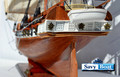
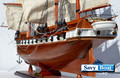
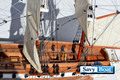
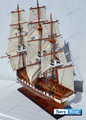
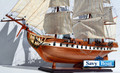
FULLY BUILT AND READY TO DISPLAY MUSEUM QUALITY SHIP MODEL
- Dimension approx.: 36″ L x 11″ W x 26″ H
- The model is already built. THIS IS NOT A MODEL SHIP KIT
The Final Breath of America’s Age of Sail
When USS Constellation was launched at the Norfolk (Gosport) Navy Yard on 26 August 1854, she represented the end of an era. Built entirely for sail at a time when steam power was beginning to reshape naval warfare, she was the last sail‑only warship designed and constructed for the U.S. Navy. Her sleek lines, powerful rig, and balanced armament reflected the peak of mid‑19th‑century naval architecture—an elegant sloop‑of‑war meant to carry American influence across the world’s oceans.
Named in honor of the earlier frigate Constellation—broken up just a year before—she carried forward a legacy of American seamanship. Commissioned on 28 July 1855, she mounted a formidable battery of 16 eight‑inch shell guns, four 32‑pounder long guns, and lighter weapons, giving her both reach and striking power under sail.
In 1859, Constellation became flagship of the U.S. African Squadron, tasked with intercepting slave‑trade vessels along the West African coast. Her speed and handling made her well suited for the mission, and she captured several slavers—part of America’s growing commitment to suppressing the transatlantic slave trade.
During the American Civil War, she served in the Mediterranean, protecting American interests and watching for Confederate raiders. Later assigned to the Gulf Coast Blockading Squadron, she helped enforce the Union blockade that slowly strangled Confederate commerce.
After the war, Constellation entered a long second career. From 1871 to 1893, she served as a training ship for the U.S. Naval Academy, shaping generations of midshipmen. She carried exhibits to the 1878 Paris Exposition, and in 1879, she delivered food relief to famine‑stricken Ireland—an early example of American humanitarian assistance by sea.
By 1893, she was reduced to a stationary training hulk at Newport, Rhode Island, where she remained for nearly half a century. Yet even in this quiet role, she endured—too historically significant to discard.
During World War II, she was recommissioned as the flagship of the U.S. Atlantic Fleet, serving symbolically during a time when the Navy had long since transitioned to steel and steam.
Preservation and Renewal
Decommissioned in 1955, Constellation was brought to Baltimore, Maryland, where she became a centerpiece of the city’s Inner Harbor. Designated a National Historic Landmark, she underwent a major restoration from 1996 to 1999, returning her to her 1854 configuration—a fully sparred barque, 181 feet long at the waterline, and once again proud under sail.
Today she serves as a museum ship and educational platform, offering tours, living‑history programs, and sail training. She is one of the most important surviving vessels of the 19th‑century Navy and a rare, tangible link to America’s sailing‑warship heritage.
USS Constellation stands as the last breath of the U.S. Navy’s age of sail—an elegant warship that bridged the gap between wooden fleets and the coming age of iron and steam. Her century of service, from anti‑slavery patrols to midshipman training and humanitarian missions, reflects the evolving role of American sea power. Today, preserved in Baltimore’s Inner Harbor, she remains a living monument to craftsmanship, tradition, and the enduring spirit of the United States Navy.


