












-
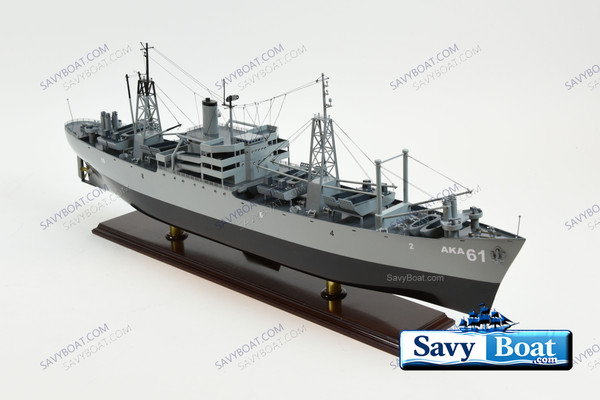
USS MULIPHEN (AKA‑61/LKA‑61) ATTACK CARGO SHIP
SAVY DIRECT PRICE $849.96MSRP: $899.99USS MULIPHEN (AKA‑61/LKA‑61) ATTACK CARGO SHIP FULLY BUILT AND READY TO DISPLAY MUSEUM QUALITY SHIP MODEL Dimension approx.: 34″ (long) x 5″ (wide) x 13″ (high). The model is already built. THIS... -

USS CONSTELLATION TALL SHIP
SAVY DIRECT PRICE $999.96MSRP: $1,099.99USS CONSTELLATION TALL SHIP FULLY BUILT AND READY TO DISPLAY MUSEUM QUALITY SHIP MODEL Dimension approx.: 36″ L x 11″ W x 26″ H The model is already built. THIS IS NOT A MODEL SHIP KIT -

USS PENNSYLVANIA TALL SHIP
SAVY DIRECT PRICE $1,299.96MSRP: $1,399.99USS PENNSYLVANIA TALL SHIP FULLY BUILT AND READY TO DISPLAY MUSEUM QUALITY SHIP MODEL Dimension approx.: 37.5″L x 9.5″W x 29″H The model is already built. THIS IS NOT A MODEL SHIP KIT Long...
Description

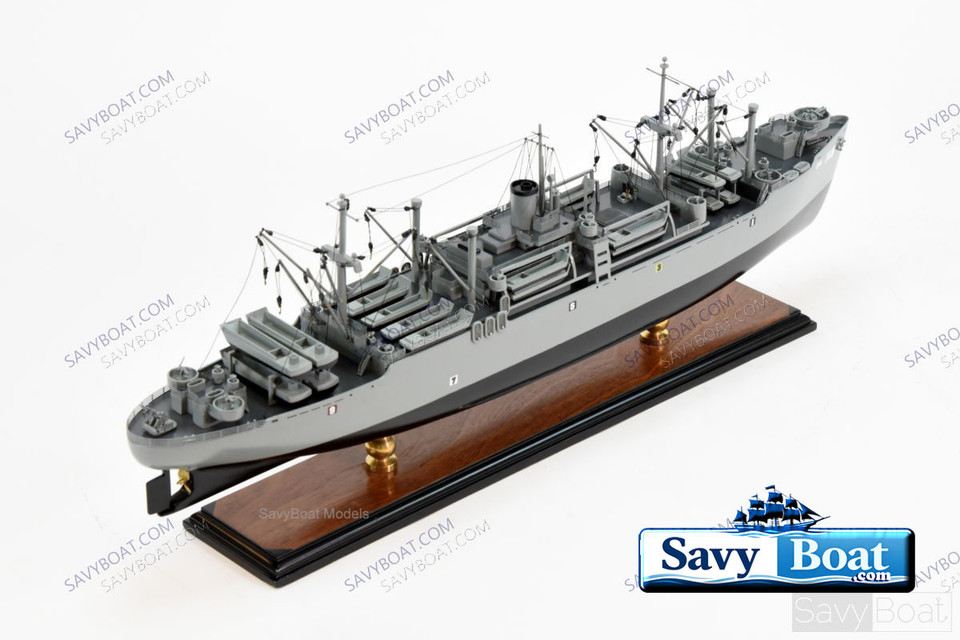
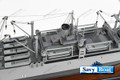
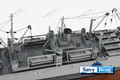
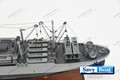
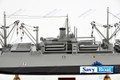
USS HASKELL (APA-117) WWII ATTACK CARGO SHIP
FULLY BUILT AND READY TO DISPLAY MUSEUM QUALITY SHIP MODEL
- Dimension approx.: 28″ (long) x 4″ (wide) x 10″ (high).
- The model is already built. THIS IS NOT A MODEL SHIP KIT
USS Haskell (APA‑117) entered service in the final year of World War II, the lead ship of a new class of attack transports built on the rugged Victory Ship hull. Laid down in March 1944 at California Shipbuilding Corporation and commissioned that September, she was one of the many fast, capable transports rushed into service to carry troops into the last, hardest battles of the Pacific. Named for the three Haskell Counties of Kansas, Oklahoma, and Texas, she embodied the industrial speed and wartime urgency of America’s late‑war shipbuilding program.
Assigned to the Asiatic‑Pacific Theater, Haskell quickly joined Transport Squadron Fourteen and Transport Division Forty. Her first operations took her to New Guinea in November 1944, where she unloaded troops at Biak Island and then moved to Noemfoor to prepare for the coming assault on Luzon. She was a workhorse—efficient, reliable, and constantly in motion as the Allies advanced northward.
Her first major combat landing came at Lingayen Gulf in January 1945. Sailing in Rear Admiral Richard L. Conolly’s reinforcement echelon, she arrived two days after the initial assault. Even so, the skies were still dangerous. As she disembarked troops and cargo, Japanese aircraft attacked, and Haskell’s gunners claimed their first enemy plane—a sharp reminder that transports often fought their way ashore just as fiercely as the assault ships they supported.
Later that month she shifted to Leyte Gulf, embarking soldiers of the 34th Regimental Combat Team and conducting practice landings at Tacloban. She then supported the Bataan Peninsula landing from 29–31 January, helping secure the ground that had been lost in 1942 and opening supply lines toward Manila. For thousands of troops, Haskell was the ship that carried them into the final push toward victory.
Her last major operation of the war came at Okinawa in April 1945, the largest amphibious assault of the Pacific War. There she once again delivered troops and cargo into the teeth of Japanese resistance, part of the vast fleet that fought through kamikaze attacks and brutal shore fighting to secure the island.
With the war’s end, Haskell shifted to occupation duty in the Far East, earning multiple Navy Occupation Service Medal periods between September 1945 and January 1946. Soon after, she joined Operation Magic Carpet, bringing thousands of American servicemen home from the Pacific. By May 1946, her mission was complete. She was decommissioned at Norfolk and returned to the Maritime Commission, entering the quiet rows of the James River Reserve Fleet.
She remained there for decades, a silent reminder of the massive fleet that had carried America to victory. In 1973, after nearly thirty years in reserve, she was sold for scrap—closing the final chapter of a ship that had served intensely, briefly, and effectively.
USS Haskell was not a famous ship, but she was a vital one—part of the backbone of the Pacific amphibious force. She carried soldiers into New Guinea, Luzon, Bataan, and Okinawa, supported the liberation of the Philippines, and brought American troops home when the fighting was done. Like many Victory‑built transports, her service was short but decisive, helping deliver the manpower that made Allied victory possible.


