








-

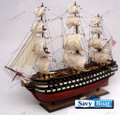
USS CONSTELLATION TALL SHIP
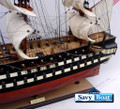
SAVY DIRECT PRICE $999.96MSRP: $1,099.99USS CONSTELLATION TALL SHIP FULLY BUILT AND READY TO DISPLAY MUSEUM QUALITY SHIP MODEL Dimension approx.: 36″ L x 11″ W x 26″ H The model is already built. THIS IS NOT A MODEL SHIP KIT -
 img:new-low-5-bottom-with-special-offer-08042026.pngimg:new-low-5-bottom-with-special-offer-08042026.png
USS RATTLESNAKE TALL SHIP
SAVY DIRECT PRICE $100.00 - $769.96USS RATTLESNAKE TALL SHIP FULLY BUILT AND READY TO DISPLAY, QUALITY SHIP MODEL Dimension approx.: 28″ (long) x 9″ (wide) x 20″ (high) The model is already built. THIS IS NOT A MODEL SHIP KIT -

USS PENNSYLVANIA TALL SHIP
SAVY DIRECT PRICE $1,299.96MSRP: $1,399.99USS PENNSYLVANIA TALL SHIP FULLY BUILT AND READY TO DISPLAY MUSEUM QUALITY SHIP MODEL Dimension approx.: 37.5″L x 9.5″W x 29″H The model is already built. THIS IS NOT A MODEL SHIP KIT Long...
Description

USS NORTH CAROLINA TALL SHIP (painted)
FULLY BUILT AND READY TO DISPLAY MUSEUM QUALITY SHIP MODEL
- Dimension approx.: 37.5″L x 8″W x 28″H
- The model is already built. THIS IS NOT A MODEL SHIP KIT
When USS North Carolina (BB‑55) slid down the ways at the New York Naval Shipyard on 13 June 1940, she marked the end of a long silence. No American battleship had been built in more than twenty years, and the world had changed dramatically since the last keel was laid. North Carolina—sleek, fast, and bristling with modern firepower—was the first of a new generation. Commissioned on 9 April 1941, she earned the nickname “The Showboat” during her shakedown cruises, a nod to the crowds and attention she drew as the Navy’s newest capital ship.
After the attack on Pearl Harbor, North Carolina steamed into the Pacific in July 1942, becoming the first American battleship to arrive at Pearl Harbor after the disaster. Her presence was a powerful symbol: the battle line was returning, stronger and more modern than before. From that moment on, she served in every major Pacific offensive, ultimately earning 15 battle stars—more than any other U.S. battleship of World War II.
Her baptism of fire came at the Battle of the Eastern Solomons in August 1942. Screening the carriers, she unleashed a wall of anti‑aircraft fire that helped break up Japanese attacks and shot down several enemy aircraft. Through the long Guadalcanal campaign she remained a constant guardian of the carriers, her 16‑inch guns ready for surface action and her 5‑inch/38 dual‑purpose batteries proving deadly against aircraft.
From the Gilberts to the Marshalls, the Marianas, and the Palaus, North Carolina became a cornerstone of the fast carrier task forces. She bombarded beaches, shielded carriers from air attack, and used her floatplanes—Vought OS2U Kingfishers—to rescue downed aviators. At the Battle of the Philippine Sea, she again formed part of the armored ring around the carriers during the famous “Marianas Turkey Shoot.”
Her final wartime operations carried her to Okinawa and the Japanese home islands, where she continued bombardment and escort duties. By war’s end, she had fired nine major shore bombardments, sunk an enemy merchant ship, and shot down 24 Japanese aircraft—a record that reflected both her firepower and her constant presence on the front line.
After the war, North Carolina served briefly as a training ship before being decommissioned in 1947. Stricken in 1960, she faced scrapping until the people of North Carolina mounted a statewide campaign to save her. Their efforts succeeded: the battleship was brought to Wilmington, North Carolina, and dedicated as a memorial on 3 October 1961.
Today, USS North Carolina stands as a National Historic Landmark, preserved as one of the most complete and authentic WWII battleships in existence. She is a monument to the sailors who fought aboard her, a symbol of North Carolina’s contribution to victory, and a living museum that continues to inspire visitors with her size, power, and history.
Her nickname still feels fitting. More than eight decades after her launch, The Showboat remains one of the most impressive battleships ever built—and one of the most storied ships in the history of the U.S. Navy.


