













-
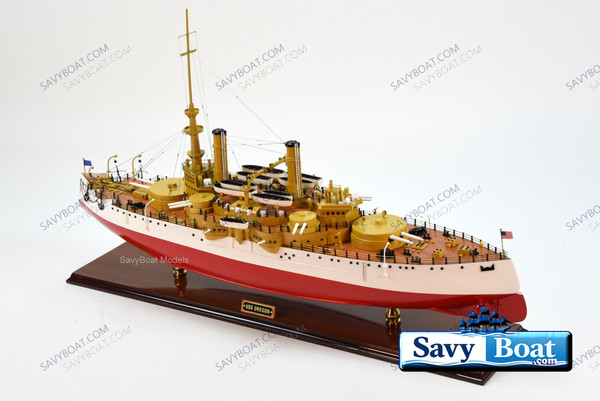
USS OREGON BATTLESHIP BB-3
SAVY DIRECT PRICE $924.96MSRP: $999.99USS OREGON BATTLE SHIP BB-3 (YELLOW) FULLY BUILT AND READY TO DISPLAY, QUALITY SHIP MODEL Dimension approx.: 34″ L x 8.5″ W x 20″ H -

USS WISCONSIN BATTLESHIP (BB-64)
SAVY DIRECT PRICE $899.96MSRP: $999.99USS WISCONSIN BATTLESHIP (BB-64) FULLY BUILT AND READY TO DISPLAY MUSEUM QUALITY SHIP MODEL Dimension approx.: 40″ L x 5″ W x 12.5″ H Appro -
 img:new-low-5-bottom-with-special-offer-08042026.pngimg:new-low-5-bottom-with-special-offer-08042026.png
USS IOWA BATTLESHIP (BB-61)
SAVY DIRECT PRICE $100.00 - $899.96USS IOWA BATTLESHIP (BB-61) FULLY BUILT AND READY TO DISPLAY, QUALITY SHIP MODEL Dimension approx.: 40″ L x 5″ W x 12.5″ H Approx. scale 1/350 This beautiful model is already built, NOT a kit.
Description

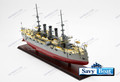
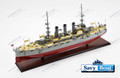
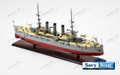
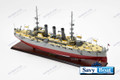
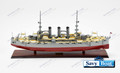
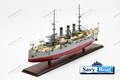
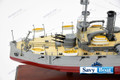
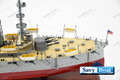
USS Nebraska (BB-14) — Virginia-Class Battleship
FULLY BUILT AND READY TO DISPLAY MUSEUM QUALITY SHIP MODEL
- Dimension approx.: 32″ L x 6″ W x 15″ H.
- The model is already built. THIS IS NOT A MODEL SHIP KIT
USS Nebraska — A Pre‑Dreadnought at the Dawn of American Sea Power
When the USS Nebraska (BB‑14) took shape at the Moran Brothers Shipbuilding yard in Seattle, she represented both ambition and transition. Laid down on 4 July 1902—a symbolic date for a ship named after an American state—she was part of the Virginia‑class pre‑dreadnoughts, the last generation of U.S. battleships built before naval technology changed forever. Launched in October 1904 and commissioned on 1 July 1907, Nebraska entered service just as the world’s navies were racing toward bigger guns, faster speeds, and all‑big‑gun dreadnought designs.
At 441 feet long and displacing nearly 15,000 tons, Nebraska carried the mixed‑caliber armament typical of pre‑dreadnoughts: 12‑inch main guns, 8‑inch secondaries, and a battery of 6‑inch and 3‑inch weapons meant to fight at multiple ranges. Her triple‑expansion steam engines, fed by 12 Babcock & Wilcox boilers, pushed her to 19 knots, respectable for her era but soon overshadowed by turbine‑powered dreadnoughts. She embodied the strengths and limitations of her class—powerful, heavily armored, but already on the verge of obsolescence.
Yet Nebraska would play a meaningful role in America’s emergence as a global naval power.
In 1908, she joined the Great White Fleet, the famous circumnavigation ordered by President Theodore Roosevelt to demonstrate American strength and diplomacy. Painted in gleaming white, Nebraska steamed across the world’s oceans alongside sixteen other battleships, visiting ports from South America to Australia to Japan. For many nations, she was one of the first U.S. battleships they had ever seen—a symbol of a rising maritime nation asserting itself on the global stage.
Her service continued into the turbulent years of the Mexican Revolution, where she deployed twice—first in 1914, then again in 1916—as part of U.S. efforts to protect American interests and maintain stability in the region. By the time the United States entered World War I, the pre‑dreadnoughts were no longer frontline combatants, but they remained valuable. Nebraska was reactivated in April 1917 as a training ship and later as a convoy escort, helping prepare thousands of sailors for wartime service.
After the Armistice, she carried American soldiers home from France, one of many ships tasked with returning the U.S. Expeditionary Forces from Europe. In 1919, she transferred to the Pacific Fleet, but her active career was nearing its end. The Washington Naval Treaty and rapid advances in battleship design made ships like Nebraska obsolete. She was decommissioned in July 1920, stricken in 1922, and sold for scrap in November 1923.
Though her service life was relatively short, USS Nebraska remains a notable vessel in early 20th‑century naval history. She was the first battleship to bear her state’s name, a participant in the Great White Fleet’s grand voyage, and a witness to the transition from pre‑dreadnought traditions to the modern battleship era. Her career reflects a moment when the United States Navy was finding its identity—expanding its reach, refining its technology, and preparing for the global conflicts that would define the century.


