









-

USNS MERCY (T-AH-19) US NAVY HOSPITAL SHIP
SAVY DIRECT PRICE $879.96MSRP: $979.99USNS MERCY (T-AH-19) US NAVY HOSPITAL SHIP FULLY BUILT AND READY TO DISPLAY MUSEUM QUALITY SHIP MODEL -

USNS COMFORT (T-AH-20) US NAVY HOSPITAL SHIP
SAVY DIRECT PRICE $879.96MSRP: $979.99USNS COMFORT (T-AH-20) US NAVY HOSPITAL SHIP FULLY BUILT AND READY TO DISPLAY MUSEUM QUALITY SHIP MODEL -

USS CONSTELLATION TALL SHIP
SAVY DIRECT PRICE $999.96MSRP: $1,099.99USS CONSTELLATION TALL SHIP FULLY BUILT AND READY TO DISPLAY MUSEUM QUALITY SHIP MODEL Dimension approx.: 36″ L x 11″ W x 26″ H The model is already built. THIS IS NOT A MODEL SHIP KIT
Description

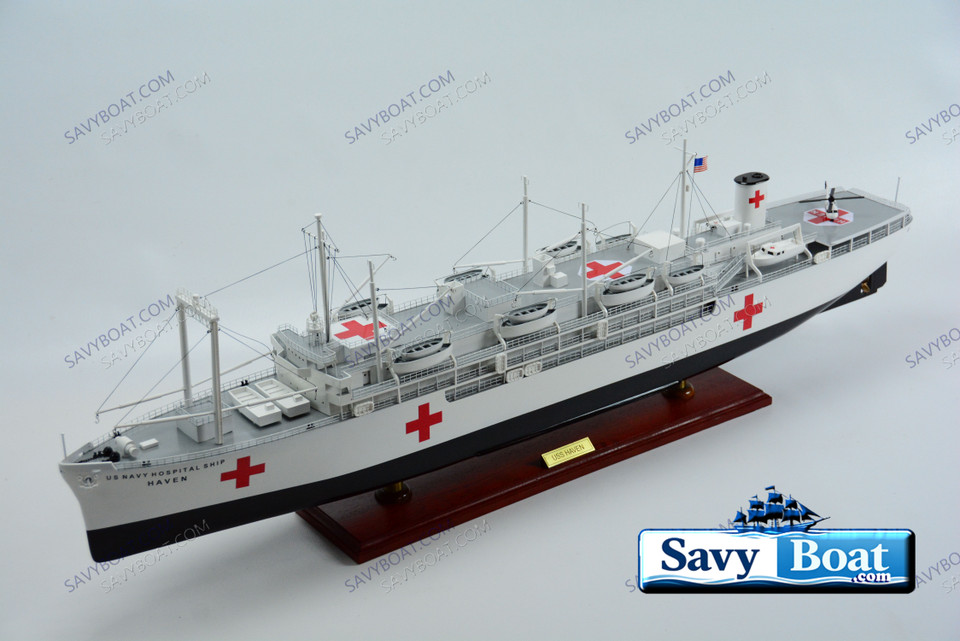
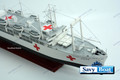
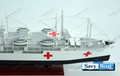
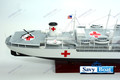
USS HAVEN (AH-12) HOSPITAL SHIP
FULLY BUILT AND READY TO DISPLAY MUSEUM QUALITY SHIP MODEL
- Dimension approx.: 40″L x 6″W x 13″H
- The model is already built. THIS IS NOT A MODEL SHIP KIT
USS Haven — A Lifeline Across Two Wars
When the USS Haven (AH‑12) entered service in May 1945, she represented one of the most humane and indispensable ship types in the U.S. Navy: the hospital ship. Originally laid down as the cargo vessel SS Marine Hawk, she was transformed into the lead ship of the Haven‑class, a fleet of floating medical centers built to care for wounded service members during the final months of World War II and the turbulent years that followed. At 520 feet long and staffed by more than 560 personnel, Haven carried operating rooms, wards, laboratories, and the ability to treat hundreds of patients at sea—an essential capability in an era of brutal Pacific combat.
Commissioned on 5 May 1945, she sailed west into a theater still reeling from the war’s final offensives. Her earliest missions took her to Guam, Saipan, and forward bases where casualties awaited evacuation. In September 1945, she arrived at Nagasaki, entering a city devastated by the atomic bomb. There she took aboard Allied prisoners of war suffering from radiation exposure, malnutrition, and injuries—one of the earliest humanitarian missions in the aftermath of nuclear warfare. Through the closing months of the year, she ferried patients back to the United States, serving as a quiet but vital bridge between the battlefield and home.
In 1946, Haven briefly shifted roles, reclassified as APH‑112 to support Operation Crossroads, the atomic tests at Bikini Atoll. As part of the medical contingent for the operation, she stood ready to treat personnel exposed to radiation or blast effects, underscoring the Navy’s growing need for specialized medical support in the atomic age. After the tests, she returned to her hospital ship designation.
Her greatest period of service came during the Korean War. From 1950 to 1953, Haven operated as one of the Navy’s primary medical evacuation and treatment ships, receiving wounded soldiers from the front and stabilizing them for transport. She earned nine battle stars, a testament not to combat but to the relentless pace of medical operations—surgeries performed around the clock, helicopters delivering casualties directly to her deck, and doctors and nurses working in conditions as demanding as any frontline.
After the war, Haven was decommissioned on 30 June 1957, but her story did not end there. She became a floating civilian hospital in Long Beach, California, continuing her mission of care in peacetime. Later sold and converted into a chemical carrier named Alaskan, she served for decades more before being scrapped in 1987—a long, varied life for a ship built to heal rather than fight.
Today, USS Haven stands as a symbol of compassion amid conflict. She carried no guns, fired no salvos, and fought no battles, yet her service saved thousands of lives. From the ruins of Nagasaki to the frozen shores of Korea, she embodied the quiet heroism of hospital ships—vessels whose legacy is measured not in tonnage or firepower, but in the lives they carried home.


