








-

VIKING CLINKER BUILT ANCIENT SHIP
SAVY DIRECT PRICE $349.96MSRP: $399.99VIKING CLINKER-BUILT ANCIENT SHIP FULLY BUILT AND READY TO DISPLAY MUSEUM QUALITY SHIP MODEL Dimension approx.: 16″ (long) x 9.5″ (wide) x 9.5″ (high) The model is already built. THIS IS NOT A... -

SKULDELEV CLINKER BUILT ANCIENT VIKING SHIP
SAVY DIRECT PRICE $599.96MSRP: $649.99SKULDELEV CLINKER-BUILT ANCIENT VIKING SHIP FULLY BUILT AND READY TO DISPLAY MUSEUM QUALITY SHIP MODEL Dimension approx.: 40″ (long) x 6″ (wide) x 20″ (high) The model is already built. THIS IS... -
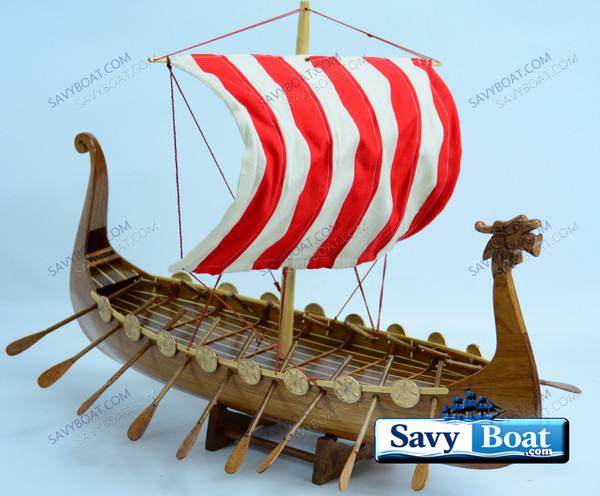
DRAKKAR VIKING SHIP W/SAIL
SAVY DIRECT PRICE $289.96MSRP: $329.99DRAKAR VIKING SHIP WITH OARS FULLY BUILT AND READY TO DISPLAY, QUALITY SHIP MODEL Dimension approx.: 24″ (long) x 7″ (wide) x 17″ (high) The model is already built, NOT a model ship kit Long...
Description

OSEBERG ANCIENT VIKING SHIP
FULLY BUILT AND READY TO DISPLAY MUSEUM QUALITY SHIP MODEL
- Dimension approx.: 34L x 8W x 18H (inches)
- The model is already built. THIS IS NOT A MODEL SHIP KIT
The Oseberg ship stands as one of the most extraordinary discoveries of the Viking Age — a vessel so well preserved, so richly adorned, and so revealing of its world that it transformed our understanding of Viking craftsmanship and ceremony. Buried in a grassy mound on the Oseberg farm near Tønsberg, Norway, it remained hidden for more than a thousand years until a carved wooden fragment caught the eye of a farmer in 1903. Archaeologist Gabriel Gustafson recognized its significance immediately, and by 1904–1905, the full excavation revealed a masterpiece of Viking shipbuilding.
Dated to 834 CE, the Oseberg ship is a karve‑type longship, built primarily of oak in southwestern Norway. Measuring 21.6 meters long and 5.1 meters wide, it carried fifteen oars on each side and could be powered by either sail or rowing. Its mast once rose nearly ten meters, supporting a broad sail that allowed the ship to glide swiftly across coastal waters. Yet the Oseberg ship was more than a vessel of travel — it was a vessel of status, ceremony, and symbolism.
After roughly fourteen years of service at sea, the ship was hauled ashore and prepared for a burial of exceptional grandeur. Two women of high rank — likely figures of political or spiritual authority — were laid to rest within its hull. Around them, the Vikings placed an astonishing array of grave goods: carved sleds, a ceremonial wagon, animal‑headed posts, textiles, furniture, tools, food, and the remains of animals meant to accompany them into the afterlife. The ship’s intricate carvings, including the famous serpent‑like prow, reflect the artistic sophistication and mythic imagination of the Viking world.
Today, the Oseberg ship is celebrated as the best‑preserved Viking ship ever found, a centerpiece of the Viking Ship Museum in Oslo. Its discovery reshaped the field of Viking archaeology, revealing not only the technical mastery of Norse shipwrights but also the cultural importance of ships as symbols of power, identity, and passage between worlds. A full‑scale replica, Saga Oseberg, launched in 2012, proved the vessel’s seaworthiness once more — a living tribute to the craftsmanship of its builders more than a millennium ago.
The Oseberg ship remains a breathtaking window into Viking society: its artistry, its rituals, and its deep connection to the sea.


