











-

USS FLETCHER (DD-445) WWII DESTROYER
SAVY DIRECT PRICE $899.96MSRP: $999.99USS FLETCHER (DD-445) WWII DESTROYER FULLY BUILT AND READY TO DISPLAY MUSEUM QUALITY SHIP MODEL Dimension approx.: 39L x 5W x 12H The model is already built. THIS IS NOT A MODEL SHIP KIT When war... -

USS TRATHEN (DD-530) WWII FLETCHER CLASS DESTROYER
SAVY DIRECT PRICE $899.96MSRP: $999.99USS TRATHEN (DD-530) WWII FLETCHER CLASS DESTROYER FULLY BUILT AND READY TO DISPLAY MUSEUM QUALITY SHIP MODEL Dimension approx.: 31.5″L x 4″W x 11″H The model is already built. THIS IS NOT A MODEL... -
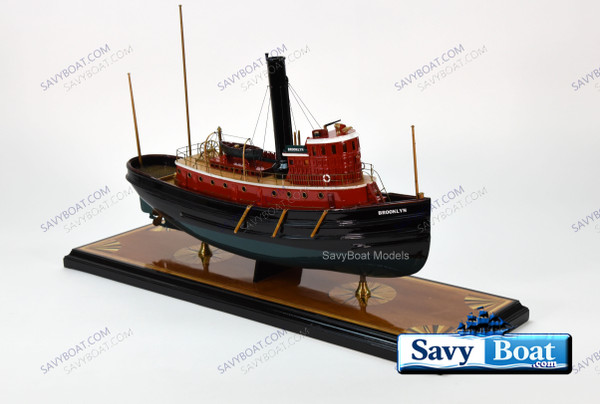
BROOKLYN TUGBOAT
SAVY DIRECT PRICE $1,199.96MSRP: $1,299.99Brooklyn Tugboat FULLY BUILT AND READY TO DISPLAY MUSEUM QUALITY SHIP MODEL Dimension approx.: 24″L x 6″W x 18″ H Base dimension: 30″L x 9″ W The model is already built. THIS IS NOT A MODEL SHIP...
Description

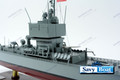
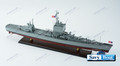
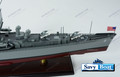
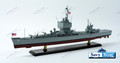
USS LONG BEACH (CNG-9) NUCLEAR CRUISER
FULLY BUILT AND READY TO DISPLAY MUSEUM QUALITY SHIP MODEL
- Dimension approx.: 40″L x 4″W x 15″H
- The model is already built. THIS IS NOT A MODEL SHIP KIT
When USS Long Beach (CGN‑9) entered service in September 1961, she was unlike any warship the world had ever seen. Towering, angular, and bristling with radar arrays, she was the first nuclear‑powered surface combatant, a cruiser built not around guns but around guided missiles—an unmistakable symbol of the Cold War’s technological leap. She was the sole ship of her class, the last cruiser built on a traditional cruiser hull, and the first to prove that nuclear propulsion could drive a major surface warship across the globe without ever stopping for fuel.
Laid down at Bethlehem Steel’s Fore River Shipyard in 1957 and launched in 1959, Long Beach embodied the Navy’s ambition to merge endurance with electronic warfare. Under Captain Eugene P. Wilkinson, who had commanded the pioneering nuclear submarine Nautilus, she began her shakedown trials in late 1961, testing both her reactors and her revolutionary missile systems. Her early years in the Atlantic Fleet were spent refining these capabilities—training off the East Coast, serving as flagship for Admiral Robert H. Dennison, and demonstrating that nuclear propulsion could sustain high‑speed operations indefinitely.
Her defining moment came in 1964, when she joined Enterprise and Bainbridge to form the Navy’s first all‑nuclear task group. Together they embarked on the legendary Sea Orbit cruise, a non‑stop circumnavigation of the globe powered entirely by nuclear energy. Over 30,000 miles in 58 days, Long Beach steamed at a steady 25 knots, visiting ports across Africa, Asia, Australia, New Zealand, and South America—never refueling, never slowing. It was a strategic message to the world: nuclear power had freed the U.S. Navy from the limits of logistics.
By the late 1960s, Long Beach had shifted to the Pacific. In 1968, she deployed to the waters off North Vietnam, taking up station on PIRAZ, the Positive Identification Radar Advisory Zone. From this lonely post she guided U.S. aircraft, tracked enemy movements, and provided early warning during some of the most intense air operations of the war. Her missile battery—Terrier, Talos, and ASROC—made her one of the most heavily armed cruisers afloat, capable of engaging aircraft at extreme ranges and defending the fleet against multiple threats.
As the Cold War evolved, so did she. Through the 1970s and 1980s, Long Beach received Standard ER missiles, Harpoon, Tomahawk, and Phalanx CIWS, transforming her into a multi‑mission cruiser capable of long‑range air defense, surface strike, and anti‑submarine warfare. She completed multiple WestPac deployments, trained midshipmen in nuclear tactics, and conducted global cruises that showcased American reach from the Mediterranean to the Western Pacific.
After more than three decades of service, Long Beach was deactivated in 1994 and decommissioned on 1 May 1995. Her massive nuclear propulsion block—over 423 feet long—remained at Puget Sound Naval Shipyard for years, a silent monument to her groundbreaking design.
Today, USS Long Beach stands as a milestone in naval history. She proved the viability of nuclear‑powered surface combatants, pioneered the missile‑armed cruiser concept, and served across the globe from the height of the Cold War to the twilight of the 20th century. Her legacy endures in every modern missile cruiser and destroyer that followed—ships built on the foundation she helped create.


