








-

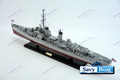
USS GEARING (DD-710) - GEARING CLASS DESTROYER
SAVY DIRECT PRICE $899.96MSRP: $999.99USS GEARING (DD-710) - GEARING CLASS DESTROYER FULLY BUILT AND READY TO DISPLAY MUSEUM QUALITY SHIP MODEL Dimension approx.: 31.5″L x 4″W x 11″H The model is already built. THIS IS NOT A MODEL... -

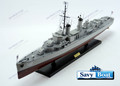
USS TRATHEN (DD-530) WWII FLETCHER CLASS DESTROYER
SAVY DIRECT PRICE $899.96MSRP: $999.99USS TRATHEN (DD-530) WWII FLETCHER CLASS DESTROYER FULLY BUILT AND READY TO DISPLAY MUSEUM QUALITY SHIP MODEL Dimension approx.: 31.5″L x 4″W x 11″H The model is already built. THIS IS NOT A MODEL... -

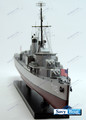
USS FLETCHER (DD-445) WWII DESTROYER
SAVY DIRECT PRICE $899.96MSRP: $999.99USS FLETCHER (DD-445) WWII DESTROYER FULLY BUILT AND READY TO DISPLAY MUSEUM QUALITY SHIP MODEL Dimension approx.: 39L x 5W x 12H The model is already built. THIS IS NOT A MODEL SHIP KIT When war...
Description

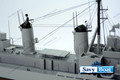
USS HARRY E. HUBARD (DD-748) - SUMNER CLASS DESTROYER
FULLY BUILT AND READY TO DISPLAY MUSEUM QUALITY SHIP MODEL
- Dimension approx.: 39.5″L x 5″W x 14″H
- The model is already built. THIS IS NOT A MODEL SHIP KIT
Commissioned in the summer of 1944, the USS Harry E. Hubbard (DD‑748) entered service carrying a name already etched in sacrifice. Her namesake, Lieutenant Commander Harry Enson Hubbard, had died heroically in 1942 while commanding the destroyer Meredith during the brutal Solomons campaign. The new Sumner‑class destroyer—sleek, fast, and heavily armed—was built to honor that legacy. Laid down at Bethlehem Steel’s Staten Island yard in October 1943, launched in March 1944, and commissioned on 22 July 1944, she joined the fleet at a moment when destroyers were becoming indispensable in the Pacific.
Before she ever fired a shot in anger, Hubbard served as the flagship of Destroyer Squadron 64, training crews for the rapidly expanding wartime Navy. Only in January 1945 did she finally head west, arriving at Pearl Harbor to prepare for the largest amphibious assault of the Pacific War—Okinawa.
She reached the island on 8 May 1945, entering one of the most dangerous roles assigned to American destroyers: radar picket duty. These lonely stations, far from the main fleet, absorbed the full fury of Japanese air attacks. For 19 days, Hubbard stood watch on picket lines, tracking incoming raids, directing fighters, and firing her guns at kamikazes. She spent another 15 days in antisubmarine and antiaircraft screens, constantly maneuvering to protect carriers and transports.
Her combat record at Okinawa was fierce and steady. She was credited with destroying four enemy aircraft and assisting in the downing of another. On 25 May 1945, she helped escort the badly damaged APD Barry into Kerama Retto—and that same day shot down two Japanese torpedo planes. She also participated in salvage operations for the shattered destroyers Haddley and Evans, both victims of massive kamikaze attacks. In these moments, Hubbard embodied the destroyer’s dual nature: a fighter when needed, a rescuer when duty demanded.
After the war, her career became a reflection of the Navy’s shifting needs. She was decommissioned in January 1947, recommissioned in May 1949, decommissioned again that December, and brought back once more in October 1950 as Cold War tensions rose. Through the 1950s and 1960s she served in the Pacific, a reliable Sumner‑class destroyer in an era of rapid technological change.
Her long service ended on 17 October 1969, when she was decommissioned and stricken. Sold for scrap in 1970, she was broken up—closing the final chapter of a ship that had carried her namesake’s legacy through the last great battles of World War II and into the Cold War.
Today, USS Harry E. Hubbard is remembered for her steadfast service at Okinawa, where destroyers bore the brunt of kamikaze attacks and saved countless lives. She honored the courage of the officer whose name she bore, and she stands as one of the many Sumner‑class ships whose speed, firepower, and resilience helped secure victory in the Pacific.


