







-

RS 2 LANGESUND SAILBOAT
SAVY DIRECT PRICE $429.96MSRP: $459.99RS 2 LANGESUND SAILBOAT FULLY BUILT AND READY TO DISPLAY QUALITY MODEL Dimension approx.: 20L x 6.5W x 27H (inch) The model is already built. THIS IS NOT A MODEL SHIP KIT A Boat Born of... -
 SAVE - $2.00SAVE - $2.00
BEACHED SAILBOAT T-SHIRT
SAVY DIRECT PRICE $17.99 - $24.99Are you looking for something to refresh your wardrobe? Modern and comfortable, our Dry Blend T-Shirt fits perfectly into any wardrobe. This shirt is more breathable and moisture wicking because of... -
 SAVE - $2.00SAVE - $2.00
WATERCOLOR SAILBOAT T-SHIRT
SAVY DIRECT PRICE $17.99 - $24.99Are you looking for something to refresh your wardrobe? Modern and comfortable, our Dry Blend T-Shirt fits perfectly into any wardrobe. This shirt is more breathable and moisture wicking because of...
Description

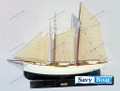
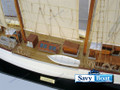
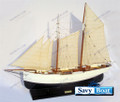
WANDERBIRD SAILBOAT
FULLY BUILT AND READY TO DISPLAY MUSEUM QUALITY SHIP MODEL
- Dimension approx.: 37.5″L x 7″W x 29″H
- The model is already built. THIS IS NOT A MODEL SHIP KIT
Long before she became known as Wanderbird, the schooner was born as Pilot Schooner No. 5 Elbe, launched in 1883 from the yard of Gustav Junge in Hamburg. Built for speed, seaworthiness, and the demanding work of guiding ships through the Elbe River approaches, she spent 41 years as a working pilot vessel—darting out to meet incoming steamers, battling tides and weather, and earning a reputation for rugged reliability. Her long, graceful hull and powerful sail plan made her one of the finest pilot schooners of her era.
In the 1920s, her life changed dramatically. She was purchased by American journalist and adventurer Warwick Tompkins, who saw in the aging pilot boat not a relic, but a vessel capable of crossing oceans. Renamed Wanderbird, she began a new chapter—one defined not by harbor work, but by blue‑water voyaging. Tompkins sailed her across the Atlantic several times before settling with his family in the San Francisco Bay Area, where the schooner became a familiar sight among West Coast sailors.
Her most famous voyage came in the 1930s, when the Tompkins family undertook one of the most daring passages in sailing history: rounding Cape Horn from east to west, the “wrong way,” against prevailing winds and seas. On June 26, 1936, Wanderbird departed Gloucester, Massachusetts, with a crew of ten—including Tompkins’ wife and children—and set out on an eight‑month odyssey that took them to Europe and then down the Atlantic toward the Horn. The voyage was later immortalized in Tompkins’ books Fifty South to Fifty South (1938) and Two Sailors and Their Voyage Around Cape Horn (1939), as well as in his film Cape Horn Passage to California. These accounts cemented Wanderbird’s place among the great adventure vessels of the 20th century.
Her long life was not without hardship. She was struck by a freighter in Hamburg, sank, and was later raised and shipped to Denmark for repair. Over the decades she fell into disrepair in the Bay Area, her once‑proud lines weathered by time. But she was revived again—this time by Captain Harold Sommer, who undertook a major restoration that returned her to sailing condition. During this period she was photographed by maritime photographer Ben Mendlowitz, capturing her beauty during a rare moment of rebirth.
Eventually, Wanderbird was shipped back to Germany, where she was restored to her original identity as Elbe No. 5. Today she is preserved as a historic vessel, a living testament to her extraordinary journey from working pilot schooner to world‑roaming adventure ship. Her history is filled with remarkable stories—crew members who claimed to have worked on her during her original construction, voyages tied to scientific conservation efforts such as sea‑turtle tagging in the Exumas, and generations of sailors inspired by her resilience.
More than a century after her launch, Wanderbird / Elbe No. 5 remains one of the most storied schooners afloat—a vessel that has served harbors, crossed oceans, rounded Cape Horn, survived collisions, and been reborn multiple times. She stands today as a symbol of endurance, craftsmanship, and the spirit of adventure that defines the world’s great sailing ships.


