









-
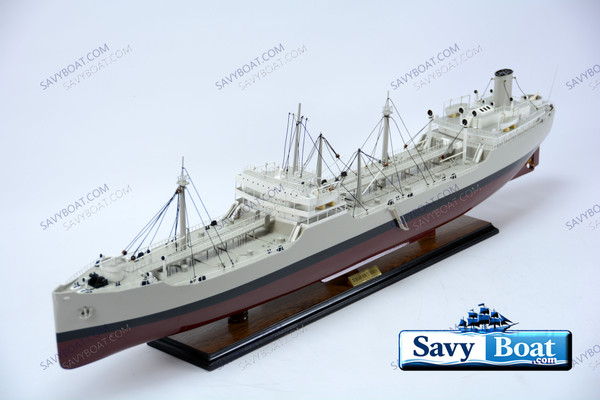
BUSHY RUN T2 TANKER
SAVY DIRECT PRICE $649.96MSRP: $699.99BUSHY RUN T2 TANKER FULLY BUILT AND READY TO DISPLAY MUSEUM QUALITY SHIP MODEL Dimension approx.: 32″ L x 4″ W x 9″ H The model is already built. THIS IS NOT A MODEL SHIP KIT The Bushy -
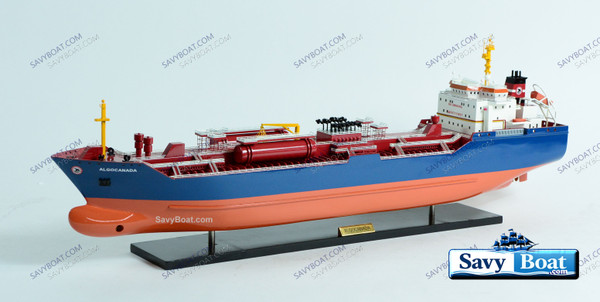
ALGOCANADA OIL TANKER
SAVY DIRECT PRICE $649.96MSRP: $749.99ALGOCANADA OIL TANKER FULLY BUILT AND READY TO DISPLAY MUSEUM QUALITY SHIP MODEL Dimension approx.: 34″ L x 5.5″ W x 12″ H The model is already built. THIS IS NOT A MODEL SHIP KIT In the world... -
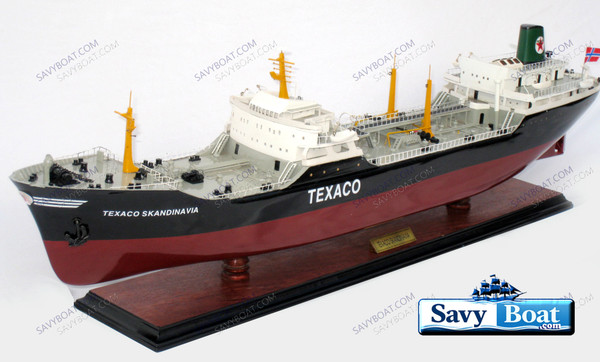
TEXACO SKANDINAVIA DIESEL TANKER
SAVY DIRECT PRICE $649.99MSRP: $699.99TEXACO SKANDINAVIA DIESEL TANKER FULLY BUILT AND READY TO DISPLAY MUSEUM QUALITY SHIP MODEL Dimension approx.: 32″ L x 5″ W x 10″ H The model is already built. THIS IS NOT A MODEL SHIP KIT
Description

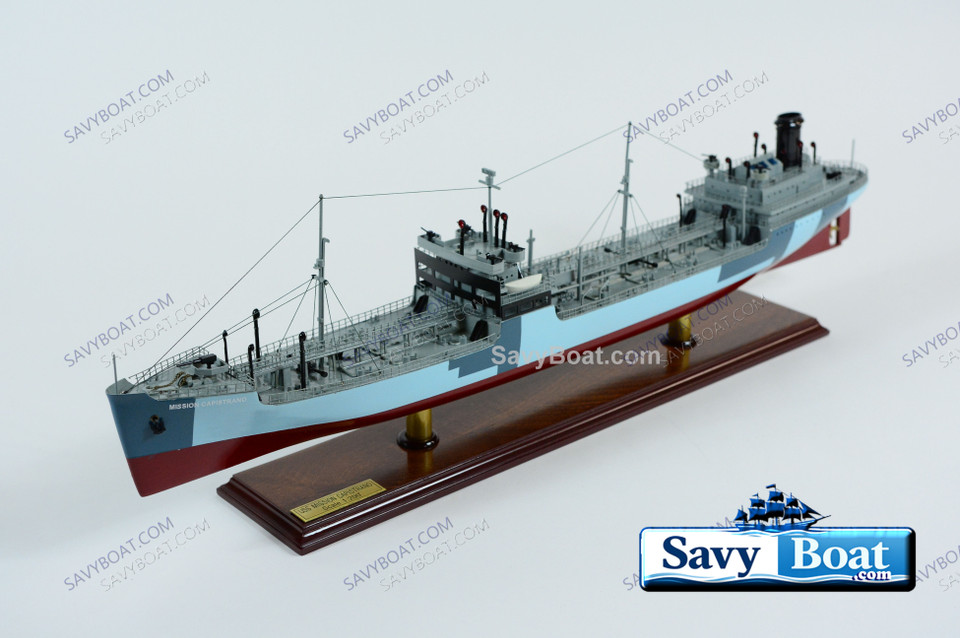
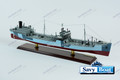
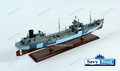
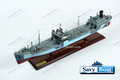
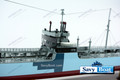
USS/USNS MISSION CAPISTRANO T2 TANKER
FULLY BUILT AND READY TO DISPLAY MUSEUM QUALITY SHIP MODEL
- Dimension approx.: 32″ L x 4″ W x 9″ H
- The model is already built. THIS IS NOT A MODEL SHIP KIT
USS/USNS Mission Capistrano (AO‑112 / T‑AO‑112 / AG‑162)
The USS/USNS Mission Capistrano was a Mission Buenaventura-class fleet oiler built during World War II for the U.S. Maritime Commission. Throughout a career that spanned nearly three decades, the ship served as a tanker supporting military operations, a transport vessel for the Navy's Military Sea Transportation Service, and later a specialized research platform for advanced underwater sonar experiments.
Constructed by Marinship Corporation in Sausalito, California, the vessel was laid down on 29 February 1944, launched on 7 May 1944, and delivered on 14 June 1944. Operated initially by Pacific Tankers Inc., the ship's primary wartime mission was transporting petroleum products to Allied forces across the globe. These fuel shipments were essential to sustaining naval operations and maintaining the mobility of military forces during World War II.
Following the war, Mission Capistrano was returned to the Maritime Commission in April 1946 and placed in reserve. The Navy acquired the vessel in November 1947, commissioning her as USS Mission Capistrano (AO‑112). She served with the Naval Transportation Service and, after that organization became part of the Military Sea Transportation Service (MSTS) in 1949, she continued operations as USNS Mission Capistrano (T‑AO‑112). During this period, the ship operated along major tanker routes, transporting fuel and supplies in support of U.S. naval activities worldwide.
In 1955, the vessel was removed from active service and placed in the reserve fleet at Beaumont, Texas. However, she returned to service in 1956 and resumed tanker duties. A major transformation began in 1960 when the ship entered Todd Pacific Shipyards in New Orleans for conversion into a sound testing ship. On 1 July 1960, she was reclassified as AG‑162.
As a research vessel, Mission Capistrano became an important part of Project ARTEMIS, a Navy program focused on developing long-range submarine detection technologies during the Cold War. The ship carried a massive sonar transducer array housed within a specially designed structure extending through the hull. This unique equipment enabled scientists and engineers to conduct experiments aimed at improving underwater acoustic surveillance and submarine tracking capabilities.
After a decade in this specialized role, Mission Capistrano was stricken from the Naval Vessel Register on 15 September 1970 and placed in the National Defense Reserve Fleet in the James River, Virginia. She was sold in 1972, later transferred to commercial ownership, and ultimately scrapped during the early 1980s.
Named after Mission San Juan Capistrano, one of California's historic Spanish missions, Mission Capistrano enjoyed a distinctive career that reflected the changing needs of the U.S. Navy—from wartime fuel transport, to global logistics support, and finally to advanced Cold War sonar research. Few ships of her era experienced such a dramatic evolution in mission and purpose.


