






-
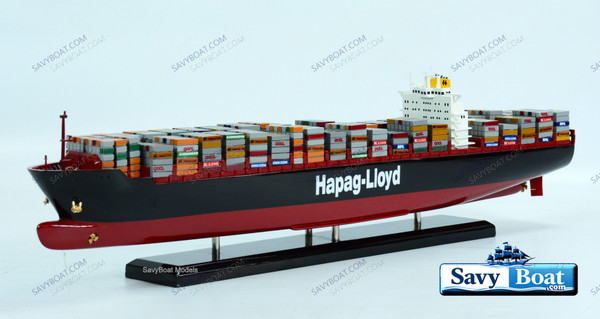
HAPAG-LLOYD CONTAINER SHIP 28
SAVY DIRECT PRICE $524.96MSRP: $559.99HAPAG LLOYD CONTAINER SHIP FULLY BUILT AND READY TO DISPLAY MUSEUM QUALITY SHIP MODEL Dimension Approx.: 27.5L x 3.5W x 8H (inch) The model is already built. THIS IS NOT A MODEL SHIP KIT Colombo... -

JAMES LYKES CARGO SHIP
SAVY DIRECT PRICE $799.96MSRP: $849.99JAMES LYKES CARGO SHIP FULLY BUILT AND READY TO DISPLAY MUSEUM QUALITY SHIP MODEL Dimension approx.: 30 inch L x 4 inch W x 11 inch H The model is already built. THIS IS NOT A MODEL SHIP KIT -

COMMERCIAL LIBERTY CARGO SHIP
SAVY DIRECT PRICE $699.96MSRP: $749.99COMMERCIAL LIBERTY CARGO SHIP FULLY BUILT AND READY TO DISPLAY MUSEUM QUALITY SHIP MODEL Dimension approx.: 34″ (long) x 5″ (wide) x 10.5″ (high) The model is already built. THIS IS NOT A MODEL...
Description

SEINE LLOYD CARGO SHIP
FULLY BUILT AND READY TO DISPLAY MUSEUM QUALITY SHIP MODEL
- Dimension Approx.: 39.75″L x 5.25″W x 12″H
- The model is already built. THIS IS NOT A MODEL SHIP KI
Launched in 1961 from the N.V. C. van der Giessen & Zonen shipyard at Krimpen aan den IJssel, the SEINE LLOYD was built for a world still rebuilding and expanding after the upheavals of the mid‑20th century. Constructed under the supervision of Firma Wm Ruys & Zonen and delivered to Koninklijke Rotterdamsche Lloyd, she embodied the sturdy, practical engineering of the Dutch merchant fleet—steel‑hulled, shelterdecked, and equipped to carry almost anything the global economy demanded.
At 166.5 meters long with a beam of 21.32 meters, she was a large and capable general cargo ship, designed to move packaged goods, machinery, vehicles, and refrigerated products across oceans. Her four masts supported an impressive array of lifting gear—heavy‑lift booms rated at 120 tons, 65 tons, and numerous smaller derricks—allowing her to load and unload cargo in ports with limited infrastructure. With more than 765,000 cubic feet of bale capacity and refrigerated space for sensitive cargo, she was built for versatility, not specialization.
Throughout the 1960s, SEINE LLOYD sailed under the Rotterdam flag, connecting Europe with markets across Asia, Africa, and the Americas. She represented the classic era of break‑bulk cargo shipping, when goods were handled piece by piece rather than in containers, and ships like her were judged by their reliability, lifting power, and the skill of their crews. In 1970, she transitioned into service with Koninklijke Nedlloyd N.V., and later Nedlloyd Lijnen B.V., reflecting the consolidation of Dutch shipping companies during the rise of containerization.
By the late 1970s, she was a veteran of countless voyages—weathered, proven, and still working hard. But in 1980, her career took a dramatic turn. While sailing from Hong Kong to Singapore, she collided with the Belgian tanker E.R. Wallonia, suffering heavy bow damage. Laid up in Singapore for repairs, she soon changed hands, sold to Trans Eastern Pte. Ltd. and renamed LIES. Under her new identity, she continued sailing, but the world around her was changing rapidly. Container ships were taking over global trade, and traditional break‑bulk cargo vessels like SEINE LLOYD were becoming relics of an earlier era.
The SEINE LLOYD was not a glamorous ship, nor a headline‑maker. She was a workhorse—one of the thousands of steel cargo vessels that quietly sustained global commerce in the decades before containerization reshaped the maritime world. Built strong, operated widely, and adapted through multiple owners, she reflected the durability and practicality of Dutch shipbuilding.
Her story is typical of post‑war cargo ships: long service, hard use, occasional mishap, and eventual retirement. Yet in that ordinariness lies her significance. Ships like SEINE LLOYD kept trade moving, connected continents, and carried the everyday goods that fueled economies. She was part of the backbone of mid‑20th‑century shipping—a vessel that did her job well, year after year, across oceans and eras.


