







-

ENDURANCE EXPEDTION SHIP
SAVY DIRECT PRICE $999.96MSRP: $1,099.99ENDURANCE TALL SHIP FULLY BUILT AND READY TO DISPLAY MUSEUM QUALITY SHIP MODEL Dimension approx.: 34″ L x 9″W x 25.5″H The model is already built. THIS IS NOT A MODEL SHIP KIT Rosewood, mahogany,... -

COSCO CONTAINER SHIP
SAVY DIRECT PRICE $899.96MSRP: $999.99COSCO CONTAINER SHIP FULLY BUILT AND READY TO DISPLAY MUSEUM QUALITY SHIP MODEL Dimension approx.: 40″ (long) x 7″ (wide) x 11″ (high) The model is already built. THIS IS NOT A MODEL SHIP KIT -

ELISSA TALL SHIP
SAVY DIRECT PRICE $649.96MSRP: $689.99ELISSA TALL SHIP FULLY BUILT AND READY TO DISPLAY QUALITY SHIP MODEL Dimension approx.: 31″ (long) x 9″ (wide) x 19″ (high) The model is already built. THIS IS NOT A MODEL SHIP KIT Launched from...
Description

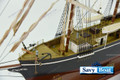
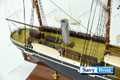
POLARIS EXPEDITION TALL SHIP
FULLY BUILT AND READY TO DISPLAY MUSEUM QUALITY SHIP MODEL
- Dimension approx.: 30″ (long) x 5.5″ (wide) x 19″ (high)
- The model is already built. THIS IS NOT A MODEL SHIP KIT
- Rosewood, mahogany, teak and other exotic woods are carefully selected to build the model
- Hand-painted to match the actual ship.
The Polaris Expedition of 1871–1873 stands as one of the most dramatic and conflicted chapters in early American Arctic exploration. It was the first major U.S. government‑funded attempt to reach the North Pole, led by the determined yet unconventional explorer Charles Francis Hall. Hall was not a naval officer nor a trained scientist; instead, he was a self‑taught Arctic traveler who had lived among the Inuit and earned a reputation for survival skill and grit. His lack of formal credentials, however, set the stage for tension long before the ship touched the ice.
The expedition sailed north aboard the USS Polaris, a refitted tugboat pushed into service as a polar vessel. With thirty‑two crew members, scientists, and Inuit guides, the ship left New York in June 1871. By late summer, Polaris reached Greenland and took aboard the famed hunter Hans Hendrik, whose experience would prove invaluable. Pressing deeper into the Arctic, the ship achieved a remarkable milestone: 82°29′N, the furthest north any American expedition had reached by sea.
But the triumph masked growing discord. Hall clashed with the German scientific staff, particularly Emil Bessels and Frederick Meyer, whose disdain for Hall’s background eroded trust within the crew. In October, Hall led a sledging journey farther north. Upon returning, he suddenly fell ill after drinking coffee and accused members of his own expedition of poisoning him. His condition deteriorated rapidly, and on November 8, 1871, Charles Francis Hall died at Thank God Harbor. Though an inquiry blamed apoplexy, a later exhumation revealed high levels of arsenic — a mystery that still shadows the expedition.
After Hall’s death, the mission unraveled. On the southward journey, nineteen men became stranded on a drifting ice floe for six harrowing months, traveling nearly 1,800 miles before rescue. The remaining crew, still aboard the damaged Polaris, ran aground near Etah and endured an Arctic winter before being saved the following year.
The Polaris Expedition remains a story of ambition and adversity — a blend of scientific hope, human conflict, and survival against the odds. It pushed American exploration farther north than ever before, yet its legacy is defined as much by its achievements as by the unanswered questions and the fragile nature of leadership in the polar world.


