









-
MS SKAUBO CARGO SHIP
SAVY DIRECT PRICE $949.96MSRP: $999.99MS SKAUBO CARGO SHIP FULLY BUILT AND READY TO DISPLAY MUSEUM QUALITY SHIP MODEL Dimension approx.: 30.5″ L x 4.5″ W x 9.5″ H The model is already built. THIS IS NOT A MODEL SHIP KIT The MS Skaubo... -
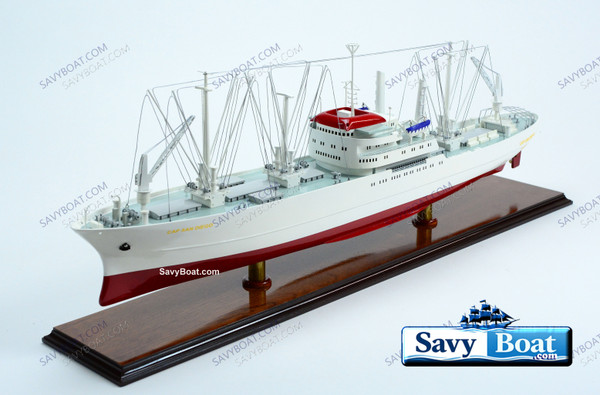
MS CAP SAN DIEGO CARGO SHIP 35
SAVY DIRECT PRICE $549.96MSRP: $589.99MS CAP SAN DIEGO CARGO SHIP FULLY BUILT AND READY TO DISPLAY SHIP MODEL Dimension approx.: 35″ L x 5″ W x 12″ H The model is already built. THIS IS NOT A MODEL SHIP KIT When the Cap San Diego... -

MS CAP SAN DIEGO LIGHTED CARGO SHIP 41
SAVY DIRECT PRICE $799.96MSRP: $899.99MS CAP SAN DIEGO LIGHTED CARGO SHIP FULLY BUILT AND READY TO DISPLAY SHIP MODEL Dimension approx.: 41″ L x 5″ W x 15″ H LIGHTED - LED lights installed (power supply not included) The model is...
Description

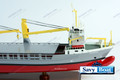
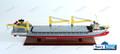
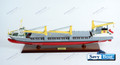
MS WIEBKE MULTI-ROLE CARGO SHIP
FULLY BUILT AND READY TO DISPLAY MUSEUM QUALITY SHIP MODEL
- Dimension approx.: 30″ (long) x 4.5″ (wide) x 10″ (high)
- The model is already built. THIS IS NOT A MODEL SHIP KIT
Launched in 2000 from the Sietas shipyard in Hamburg, the cargo ship WIEBKE entered service at a moment when global shipping was rapidly modernizing. Built by one of Germany’s most respected shipyards, she embodied the engineering precision and practical versatility that defined late‑20th‑century multipurpose vessels. At 151.6 meters in length and 20.65 meters in beam, with a gross tonnage of 8,397 and a deadweight capacity of 9,370 tonnes, she was designed to carry almost anything the world’s trade routes demanded—grain, bales, breakbulk cargo, and heavy lift consignments.
Her tweendeck configuration, with 13,604 m³ of grain capacity and 12,780 m³ for bale cargo, made her adaptable to shifting markets. Whether loading steel coils in Europe, machinery in Asia, or agricultural products bound for Australia, WIEBKE could be reconfigured quickly and efficiently. A service speed of 16–20 knots and a draught of roughly 7 meters allowed her to navigate both deep‑water ports and regional terminals, giving her a flexibility prized by charterers.
Over the years, her name evolved—WIEBEKE (2001–2010), MS WIEBKE (2010–2017), and finally WIEBKE from 2017 onward—reflecting changes in ownership and branding common in the multipurpose sector. Yet her identity remained tied to Hamburg, the port city where she was built and long registered. Managed by SAL Heavy Lift, one of Germany’s premier operators, she became part of a fleet known for reliability, technical capability, and global reach. Her classification under Germanischer Lloyd further underscored her engineering pedigree.
In 2021, she shifted to the Portuguese (Madeira) flag, a move that aligned her with modern European registry standards while maintaining her operational ties to German management. Through these transitions, WIEBKE continued to sail steadily across the world’s trade lanes.
Her recent voyage history paints the picture of a ship deeply embedded in the Asia–Australia corridor—a region defined by mineral exports, industrial cargo, and growing commercial demand. In June and July 2026, she called at ports such as Tanjong Pagar (Singapore), Parker Point and Withnell Bay (Australia), and Lobam (Indonesia). These stops reflect the rhythm of her work: loading, discharging, repositioning, and moving on to the next assignment in a cycle that has continued for more than two decades.
Today, after more than 25 years of service, WIEBKE remains a testament to the durability of German shipbuilding and the quiet importance of multipurpose carriers in global logistics. She is not a headline‑making vessel, but she is essential—one of the thousands of hardworking ships that keep world trade moving, port by port, cargo by cargo, year after year.


