







-

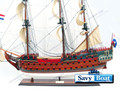
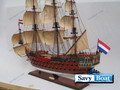
De ZEVEN PROVINCIEN TALL SHIP (wood hull w/sails)
SAVY DIRECT PRICE $999.96MSRP: $1,099.99De ZEVEN PROVINCIEN TALL SHIP (wood hull w/sails) FULLY BUILT AND READY TO DISPLAY MUSEUM QUALITY SHIP MODEL Dimension approx.: 39.5″L x 10″W x 31″H The model is already built. THIS IS NOT A... -

USS OHIO TALL SHIP W/ SAILS
SAVY DIRECT PRICE $799.96MSRP: $799.99USS OHIO TALL SHIP WITH SAILS FULLY BUILT AND READY TO DISPLAY QUALITY SHIP MODEL Dimension Approx.: 32″ (high) x 7″ (wide) x 28″ (high) The model is already built, NOT a model shi -

PARMA WINDJAMMER TALL SHIP W/SAILS
SAVY DIRECT PRICE $749.96MSRP: $799.99(1902-1938) PARMA TALL SHIP W/ SAILS FULLY BUILT AND READY TO DISPLAY QUALITY SHIP MODEL Dimension Approx.: 31.5″ (long) x 7″ (wide) x 27.5″ (high) The model is
Description

De ZEVEN PROVINCIEN TALL SHIP (painted hull w/sails)
FULLY BUILT AND READY TO DISPLAY MUSEUM QUALITY SHIP MODEL
- Dimension approx.: 32″L x 8″W x 31″H
- The model is already built. THIS IS NOT A MODEL SHIP KIT
In the mid‑17th century, when the Dutch Republic stood at the height of its naval power, a new ship of the line took shape in the yards of Rotterdam. Built between 1664 and 1665, the De Zeven Provinciën was more than a warship; she was a symbol of a nation whose wealth, security, and identity were tied to the sea. Named for the seven provinces that formed the Republic, she embodied the unity and ambition of a maritime state determined to defend its trade routes and political independence.
With her broad hull, towering masts, and heavy armament, the Zeven Provinciën was built for the line of battle—where discipline, firepower, and seamanship decided the fate of nations. She carried 80 guns, arranged across two decks, giving her the strength to stand in the thickest fighting. But her greatest distinction came not from her cannons, but from the man who commanded her: Admiral Michiel de Ruyter, one of the most celebrated naval leaders in European history.
Under De Ruyter’s flag, the Zeven Provinciën became the beating heart of the Dutch fleet during the Second Anglo‑Dutch War. She led the line at the Four Days’ Battle in 1666, one of the longest and fiercest naval engagements ever fought. Amid smoke, splintered timber, and the thunder of broadsides, she served as De Ruyter’s command center—coordinating maneuvers that helped secure a hard‑won Dutch victory. A year later, she sailed into the Battle of Solebay, again at the forefront of the fleet, and in 1673 she fought at the Battle of Texel, where De Ruyter’s tactics preserved the Republic from invasion.
As decades passed, the Zeven Provinciën continued to serve through shifting alliances and new conflicts. During the War of the Grand Alliance, she faced the combined might of the French and English fleets. At the Battle of Barfleur and La Hogue in 1692, she endured devastating fire, suffering severe damage as the Dutch and English fought to halt French ambitions in the Channel. Though battered, she survived—testament to the strength of her construction and the skill of her crews.
By 1694, after nearly thirty years of service, the venerable ship was finally sold for scrapping. Her timbers were broken apart, but her legacy endured. The Zeven Provinciën remains one of the most iconic ships in Dutch naval history—a vessel that carried the Republic through its most defining battles, commanded by its greatest admiral, and remembered as a symbol of unity, resilience, and maritime mastery.
Today, her name evokes the Golden Age of Dutch seafaring, when the Republic’s fleets shaped world trade and defended a small nation with global reach. The Zeven Provinciën stands not only as a warship of her era, but as a reminder of the power and purpose of the Dutch Navy at its zenith.


